


Fire Watch
Construction and Industrial Operations
EPS provides fire watch coverage for construction sites, industrial facilities, hot work, impaired fire protection systems, outages, and other high-risk operating conditions. Our fire and safety professionals support compliance, protect continuity, and provide written documentation that site leaders can use.
Built by experienced public safety, emergency management, hazardous materials, incident command, and site safety professionals.
Competent FireWatch Safety Officers (CFSO)
Part-time, full-time, and 24/7 coverage
Active and retired fire professionals
written reports and field documentation
NFPA Fire Inspector I
OSHA fire watch and hot work awareness
For planned coverage or urgent outages
When Fire Watch Is Needed
Fire watch is often required when work conditions increase fire risk, reduce system protection, or create temporary hazards that need active monitoring.
Fire watch requirements can come from OSHA standards, adopted fire codes, owner requirements, insurance expectations, or the local Authority Having Jurisdiction. EPS helps clients support the requirement with qualified personnel, site communication, and written documentation.
Hot Work
Welding, cutting, grinding, brazing, torch-applied roofing, and other spark-producing work can expose nearby combustibles, concealed spaces, and adjacent areas to sparks, slag, and heat.
Construction, Alteration, Demolition, or Renovation work
Active project environments can create changing fire risks through exposed materials, temporary barriers, shifting access routes, and unfinished systems.
Impaired sprinkler, alarm, standpipe, or suppression systems
When sprinkler, alarm, standpipe, or suppression systems are out of service, fire watch helps maintain oversight until protection is restored or other approved safeguards are in place.
Outages, shutdowns, and maintenance windows
Planned outages and maintenance windows can temporarily reduce system coverage and create periods where active fire watch support is needed.
Industrial Turnarounds
Turnarounds often combine hot work, tight schedules, contractors, and equipment shutdowns, which can increase fire exposure across the work area.
Special events or temporary occupancy
Special events or temporary occupancy conditions may increase fire risk when people, equipment, temporary setups, or altered use of space change the normal operating environment.
Fire marshal or AHJ requirement
A fire watch may be required by the fire marshal or authority having jurisdiction based on site conditions, permit requirements, or temporary loss of protection.
Temporary heating or hazardous construction conditions
Temporary heat, fuel-fired equipment, and other hazardous construction conditions can raise ignition risk and require closer monitoring.
What EPS Provides
EPS provides trained fire watch personnel who understand jobsite conditions, impairment situations, hot work risk, communication expectations, and documentation requirements. Coverage can be scheduled part time, full time, overnight, or 24/7 based on site conditions and project needs.
Planned Fire Watch Coverage
For construction, hot work, renovation, shutdowns, and scheduled impairments.
Emergency Fire Watch Response
For outages, unplanned system impairments, failed inspections, or urgent AHJ-directed coverage.
Documentation and Coordination
For fire watch logs, shift reports, escalation notes, communication records, and site leadership updates.
Coverage can support:
Part-time | Full-time | Overnight | Weekends | 24/7
Why Professional Fire Watch Matters
Fire watch is more than filling a post. When hot work is underway, fire protection systems are impaired, or site conditions create added risk, the right personnel matter.
EPS provides professional fire watch support that helps clients protect people, property, schedule, and compliance standing through dedicated observation, clear communication, and written documentation.
Protect People
Trained fire watch personnel monitor changing conditions, exposed hazards, and early warning signs so crews, employees, visitors, and responders stay safer while work continues.
Protect Property
Hot work, outages, system impairments, and construction activity can create fire exposure in areas that are easy to miss. EPS helps monitor assigned areas and communicate concerns before they become larger problems.
Protect Schedule
When fire watch is required, delays can start quickly. EPS helps clients maintain coverage, reduce confusion, and keep work moving responsibly during planned work, inspections, outages, and unplanned impairments.
Protect Compliance Standing
Fire watch should leave a clear record. EPS provides written logs and reports that help show coverage was in place, conditions were monitored, and concerns were communicated.
Support Better Decisions
EPS brings fire service experience, safety awareness, and documentation discipline to help project leaders, EHS teams, facility managers, and owners make sound decisions under pressure.
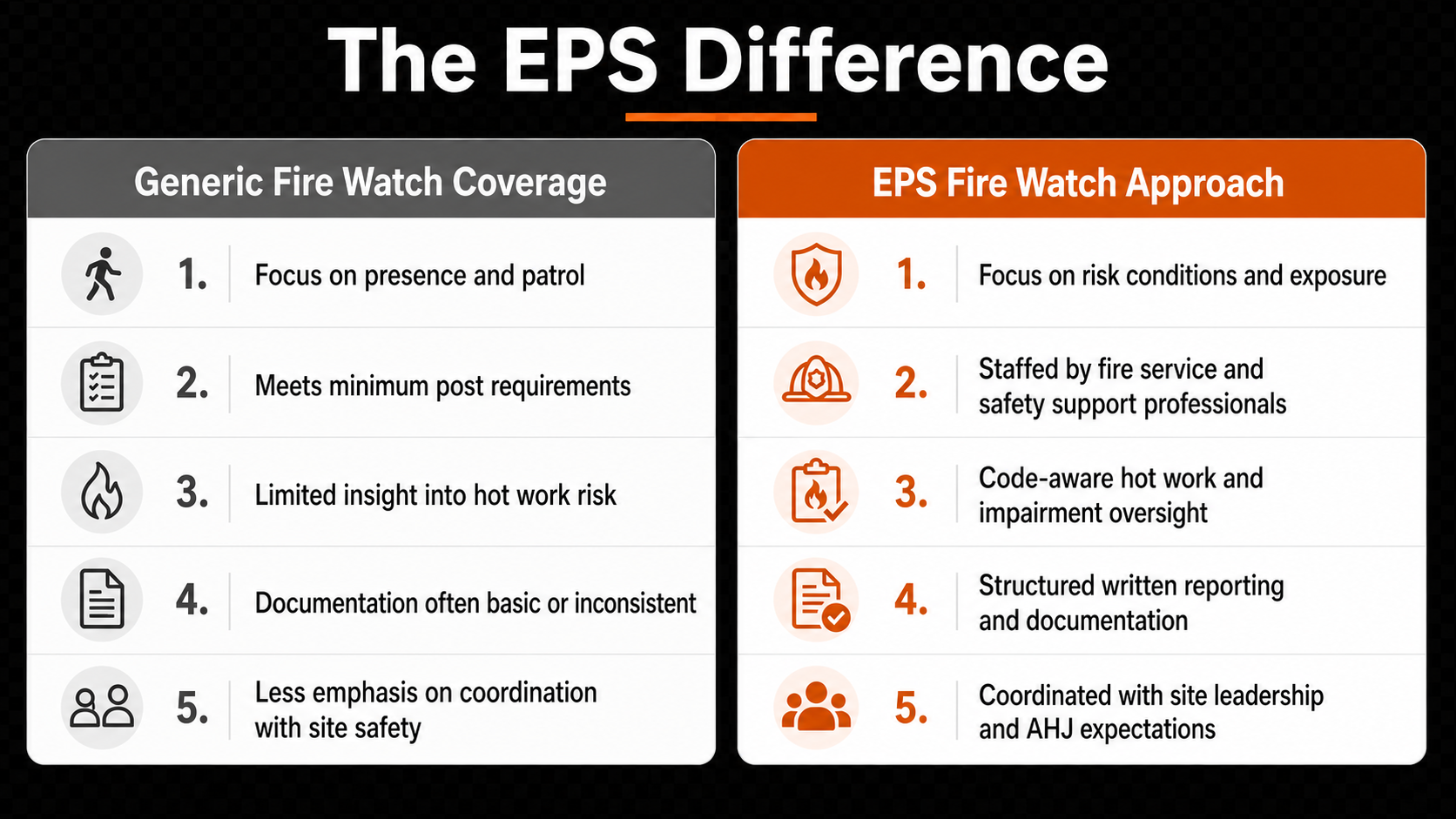
the eps difference
For higher-risk construction and industrial conditions, EPS brings deeper fire, safety, and emergency response understanding to the assignment.
fire watch services faq
-
Fire watch is a temporary safety measure where trained personnel continuously monitor an area for signs of fire, unsafe conditions, or changing risk, and are ready to raise the alarm and begin an initial response if needed.
-
Fire watch is commonly required during hot work (welding, cutting, grinding, brazing, torch-applied roofing), when sprinkler or alarm systems are impaired, during certain construction or demolition phases, or when the fire marshal or AHJ directs that a fire watch be maintained.
-
A basic patrol focuses mainly on presence and rounds, while EPS staffs posts with fire service and safety support professionals who understand hot work risk, system impairments, construction conditions, and how to communicate with site leadership and the AHJ.
-
Codes and OSHA do not require one specific license title, but they do expect fire watch personnel to be trained in hazard recognition, alarm and notification procedures, and use of extinguishing equipment. EPS assigns personnel who meet our internal standards for training, field experience, and code awareness so they can carry out those duties effectively.
-
EPS supports fire watch for construction and industrial projects, including hot work operations, system impairments, outages and shutdowns, industrial turnarounds, renovation and demolition work, and other elevated-risk conditions identified by the project team or AHJ.
-
Response time depends on location, scope, and the number of fire watch personnel needed, but EPS is structured to support urgent requests related to unplanned outages, system impairments, or short-notice work when feasible. When you contact us, we will confirm availability, expected arrival time, and the minimum details needed to deploy safely.
-
The duration depends on why the fire watch was ordered. For example, OSHA and model fire codes require a fire watch during hot work and for a defined period afterward, and many standards expect fire watch to remain in place until fire protection systems are restored or the hazard is removed. EPS will work with you and, when appropriate, the AHJ to align coverage with the applicable requirements for your project.
-
EPS fire watch posts are staffed by fire professionals and safety support supervisors who have relevant training such as OSHA 30, hot work and fire watch duties, NFPA‑informed fire code awareness, and experience with Fire Marshal expectations, documentation, and emergency communication in construction and industrial environments.
-
EPS can provide written logs and reports that capture patrol times, conditions observed, system status, incidents, and any corrective actions taken during the fire watch period. This documentation is designed to support your internal safety program, help demonstrate due diligence, and assist with discussions with owners, insurers, and AHJs.
-
Yes. EPS can be contracted for short‑term coverage during a specific task or outage, for extended projects such as major renovations or industrial turnarounds, or on a part‑time or continuous basis where ongoing fire watch or safety support is needed.